Climbing Mount Kazbek: 7 practical tips from a local mountain guide
From acclimatisation and equipment to summit-day challenges, Georgian IFMGA-certified mountain guide Misho shares his advice for preparing for an ascent of Mount Kazbek.
Rising to 5,054 metres above Stepantsminda in Georgia, Mount Kazbek is one of the Caucasus' most iconic peaks. But reaching its summit requires preparation, acclimatisation and a good understanding of mountain conditions.
To help climbers prepare for this adventure, we teamed up with Explore-Share and Misho a local IFMGA-certified mountain guide who has climbed Kazbek around 80 times.
Together, we've put together seven practical tips covering everything from choosing the right itinerary and preparing for altitude to equipment, summit day and safety.
1. Give yourself enough time on the mountain
One of the first decisions when planning a Kazbek ascent is how many days to allow.
Misho recommends at least four to five days, depending on your experience, preparation and travel arrangements.
"Many climbers arrive directly after long flights and drives," he explains. "Spending the first night in Stepantsminda is crucial for rest, proper gear checks and initial acclimatisation before heading to Base Camp."
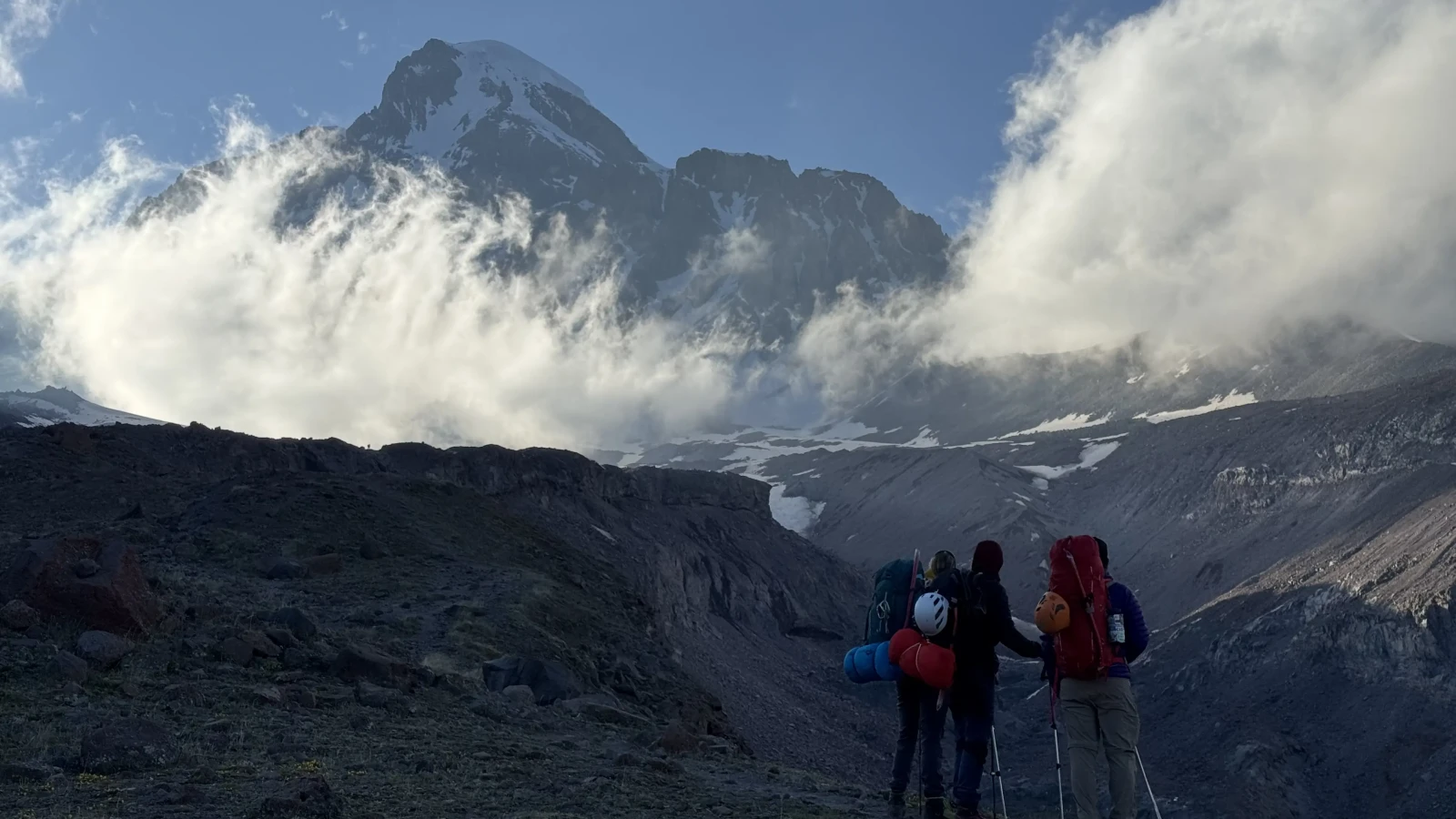
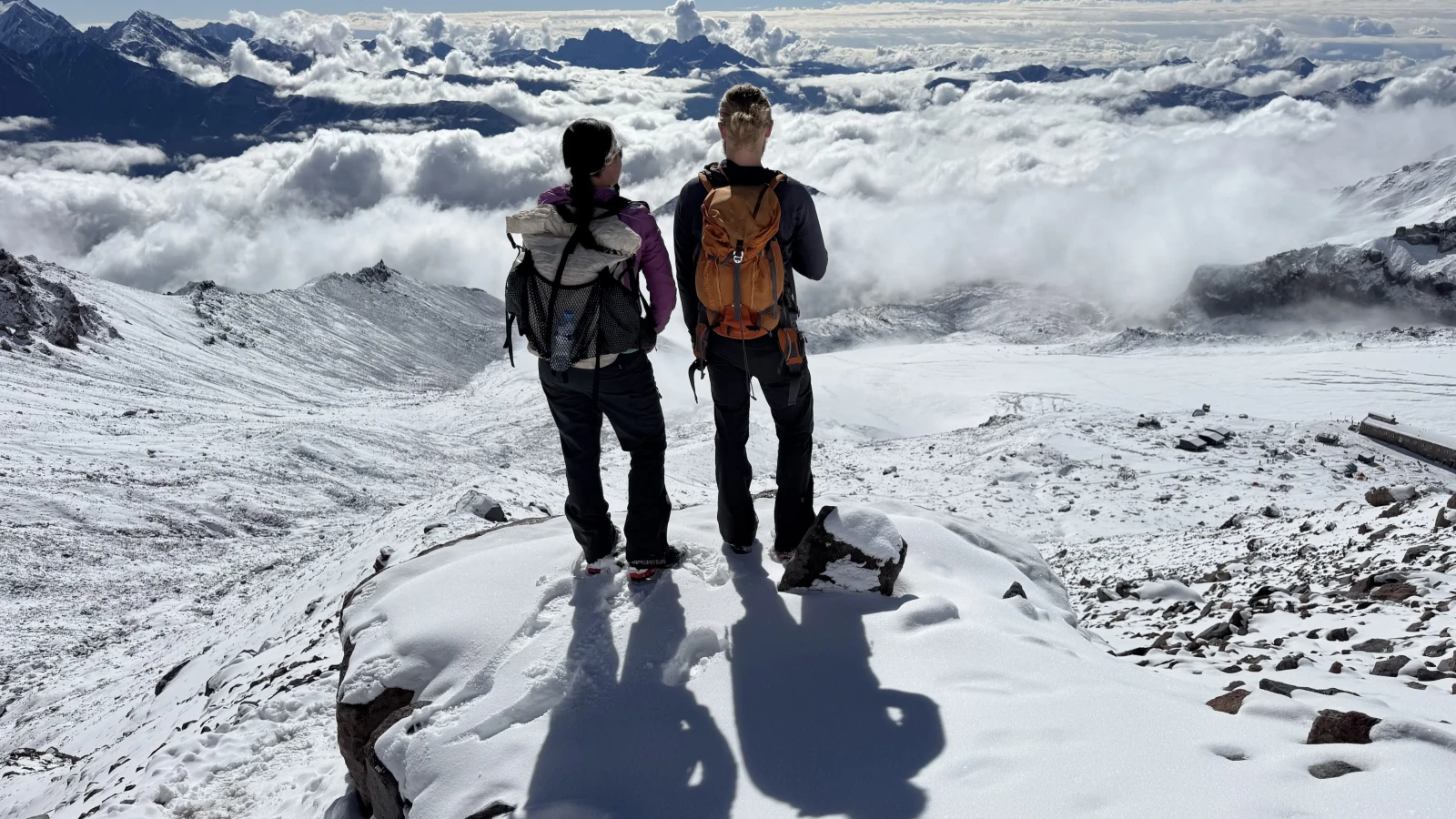
Stepantsminda, at approximately 1,750 metres, is the usual starting point for ascents from the Georgian side. From there, climbers make their way towards Bethlemi Hut, at around 3,650 metres.
For climbers who want to take a more gradual approach to Mount Kazbek, Altihut offers an additional accommodation option at 3,014 metres. Located along the route towards Bethlemi Hut, it provides an opportunity to spend a night at an intermediate altitude before continuing higher towards Base Camp. This can be particularly useful for itineraries that allow extra time for acclimatisation.
Misho offers two main options: an Express ascent lasting 3 to 4 days and a six-day All-Inclusive program.
The important difference is not the time spent climbing the mountain. Both options follow the same mountain itinerary, including the necessary acclimatisation stages.
The Express option is designed for independent travellers who prefer to arrange their own transport and accommodation. The All-Inclusive program also covers airport transfers, hotel stays in Stepantsminda and other logistics, making the experience easier to organise.
Misho advises against rushing the ascent. A shorter mountain itinerary should only be considered for climbers who are already well acclimatised from recent high-altitude experience and have the necessary fitness.
Whichever option you choose, discuss your previous altitude experience and acclimatisation needs with your guide before booking.
2. Prepare your body, but don't neglect your health
You don't necessarily need to be an experienced alpinist to climb Kazbek with a certified guide, but good physical fitness, some previous mountain experience and mental preparation are essential.
Misho recommends preparing with demanding, multi-day hikes, ideally involving more than 1,000 metres of elevation gain per day while carrying a backpack. Previous experience above 4,000 metres is also valuable, as is basic familiarity with crampons and an ice axe.
The ascent involves several consecutive days of hiking, glacier travel and a demanding summit push.
Misho recommends maintaining an active lifestyle, sleeping well and eating properly in the weeks leading up to the expedition. Arriving healthy and well rested is equally important.
He also pays close attention to how climbers perform during the initial hike to Base Camp, observing their pace, breathing and recovery.
And while physical fitness helps you manage the effort, it doesn't protect you from altitude sickness. A suitable acclimatisation schedule remains essential, and symptoms such as persistent headaches, nausea or dizziness should never be ignored.
Being prepared also means accepting that your guide may recommend postponing or abandoning the summit attempt if your health or the conditions require it.
3. Don't underestimate the cold
Ask Misho what climbers most frequently get wrong, and his answer is surprisingly simple: clothing.
"Climbers often pack light gloves or windbreakers that are simply not warm enough for Kazbek's summit push."
Even during the summer climbing season, temperatures near the summit can fall well below freezing. According to Misho, temperatures of approximately -5°C to -18°C are common during summit attempts.
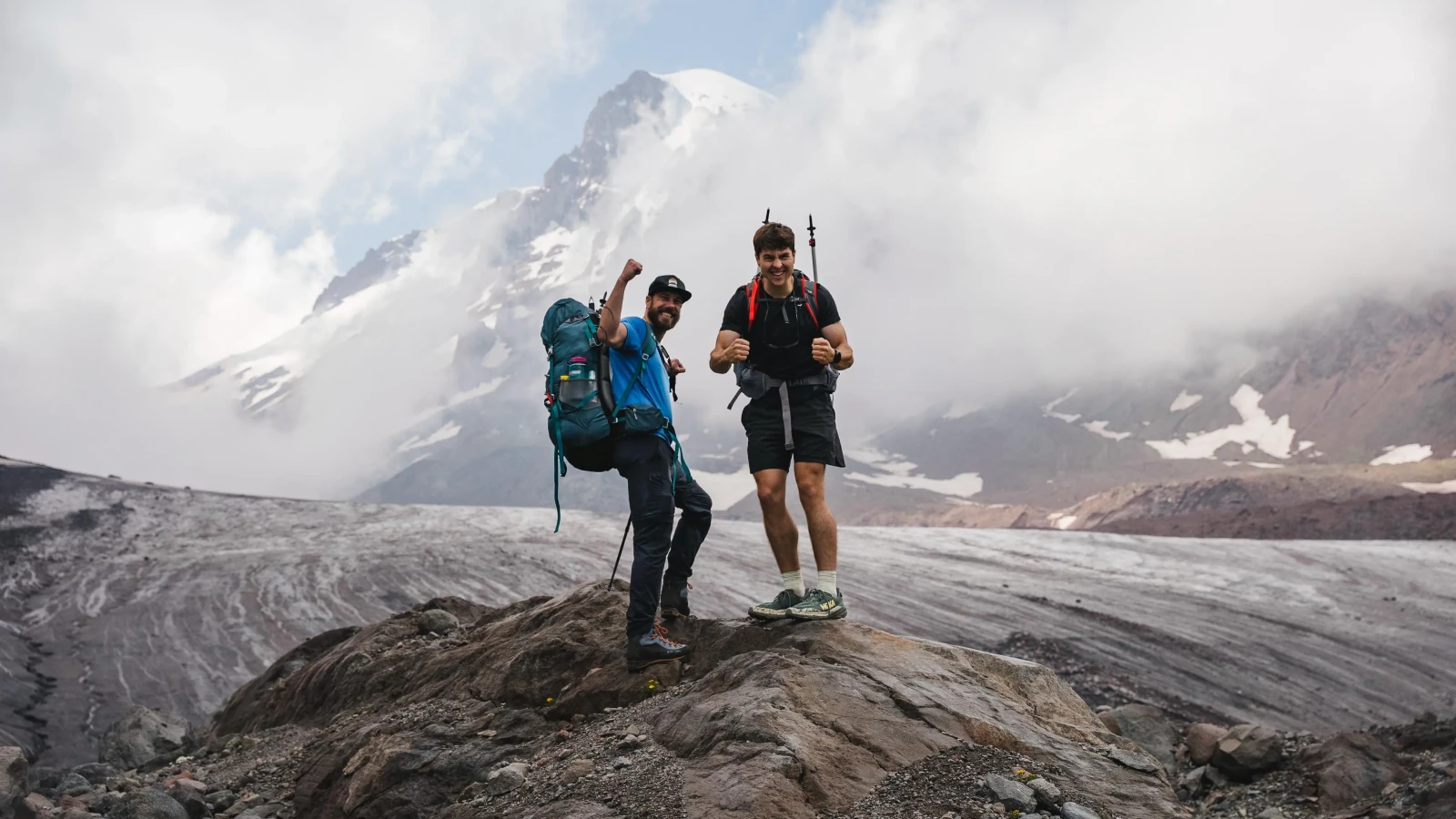
The contrast can catch people off guard. You may begin your expedition walking through green meadows in relatively mild weather, only to find yourself exposed to freezing temperatures and strong winds a few days later.
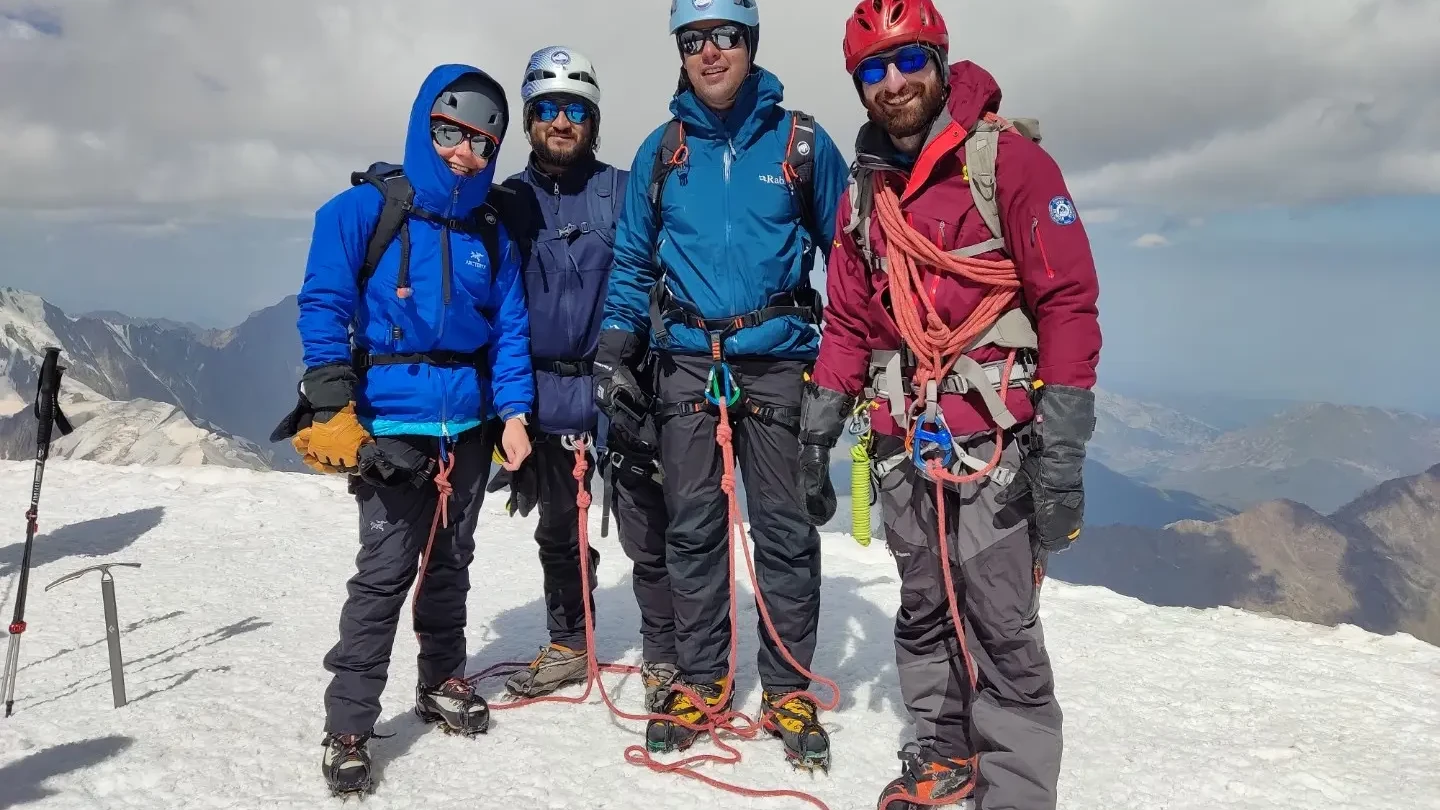
Proper layering, warm gloves, suitable mountaineering boots and protection against wind and snow are essential.
Before heading up the mountain, Misho checks his clients' equipment to make sure they're adequately prepared for the conditions.
His advice is to pay particular attention to personal clothing, especially warm layers and gloves. While technical mountaineering equipment can be rented locally, suitable cold-weather clothing can be much harder to find in Stepantsminda. It's therefore best to bring these items from home.
4. Rent technical equipment locally, but bring the right personal items
Travelling to Georgia doesn't necessarily mean bringing an entire mountaineering equipment collection.
According to Misho, technical mountaineering equipment such as crampons, ice axes, helmets and harnesses can easily be rented in Stepantsminda, where local rental shops offer a good selection of equipment.
For travellers planning other mountain activities in Georgia, including ski touring, MPLUS also offers equipment rental services.
Whichever option you choose, it's important to discuss your equipment needs with your guide before travelling.
One thing Misho particularly recommends bringing from home is appropriate cold-weather clothing, as suitable technical layers can be difficult to find or rent locally.
He also shares a less obvious tip: bring a personal water filter.
Water from glacier streams can become silty after storms, so having a reliable way to treat drinking water is useful. Make sure your chosen filter or purification method is suitable for the water conditions.
Accommodation and meals are another important part of preparation. Around Bethlemi Hut, several cafés now serve hot food, including vegetarian, vegan and gluten-free options.
5. Be prepared for a very early summit start
Summit day is usually the most demanding part of the expedition.
From Bethlemi Hut, climbers begin their ascent very early, generally no later than 4 a.m.
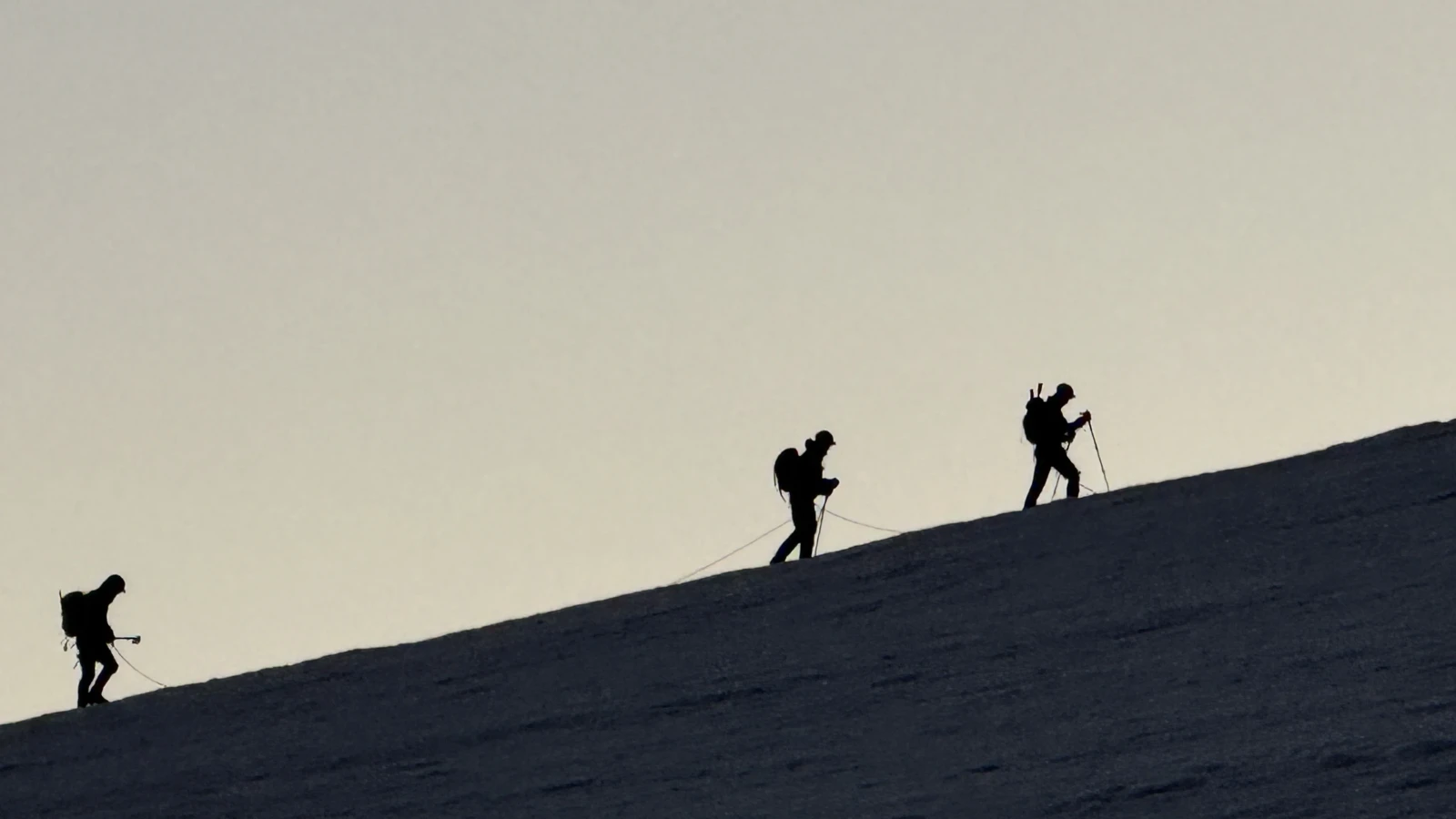
The first two to three hours involve crossing rocky moraines and uneven terrain before reaching the glacier. From there, climbers put on their crampons, rope up and continue across snow and ice, navigating around crevasses.
As the altitude increases, every step becomes more demanding. According to Misho, the final 200 vertical metres are often the hardest, with steeper terrain, thinner air and tired legs.
The entire summit day can involve approximately 8 to 12 hours of walking, depending on conditions and the group's pace.
Getting out of bed in the middle of the night isn't always easy either. Misho explains that pre-summit nerves can affect sleep, leaving climbers tired before the most demanding day has even begun.
His advice is to manage your energy carefully, maintain a steady pace and remember that reaching the summit is only half the journey.
The descent requires just as much attention and concentration, particularly when crossing the glacier again after several hours of physical effort.
6. Stay flexible: mountain conditions can change quickly
Kazbek's weather can change quickly, and even well-prepared climbers sometimes need to turn back.
For Misho, flexibility is one of the most important qualities a climber can bring to the mountain. He always includes a reserve day in his itineraries to allow for difficult weather or unexpected conditions.
But weather isn't the only thing that changes.
Having guided Kazbek for many years, Misho has witnessed significant changes to the glaciers. As the ice retreats and thins, new crevasses and other obstacles appear along the traditional ascent route.
"A route that was straightforward ten years ago can now require completely different navigation. Even a track used in June might no longer be suitable in July," he explains.
These changes make current local knowledge particularly valuable. Following an old GPS track is not enough to navigate safely through glacier terrain.
Misho recommends climbing with a certified mountain guide who understands the mountain and can adapt the route to current conditions.
And sometimes, the right decision is simply to turn back.
As he puts it, the mountain doesn't adapt to your schedule. You have to adapt to the mountain.
7. Remember why you're climbing
After around 80 ascents of Mount Kazbek, Misho has collected plenty of memorable experiences. But one particular moment has stayed with him.
He remembers guiding a climber who struggled throughout the ascent, battling exhaustion, altitude and his own doubts.
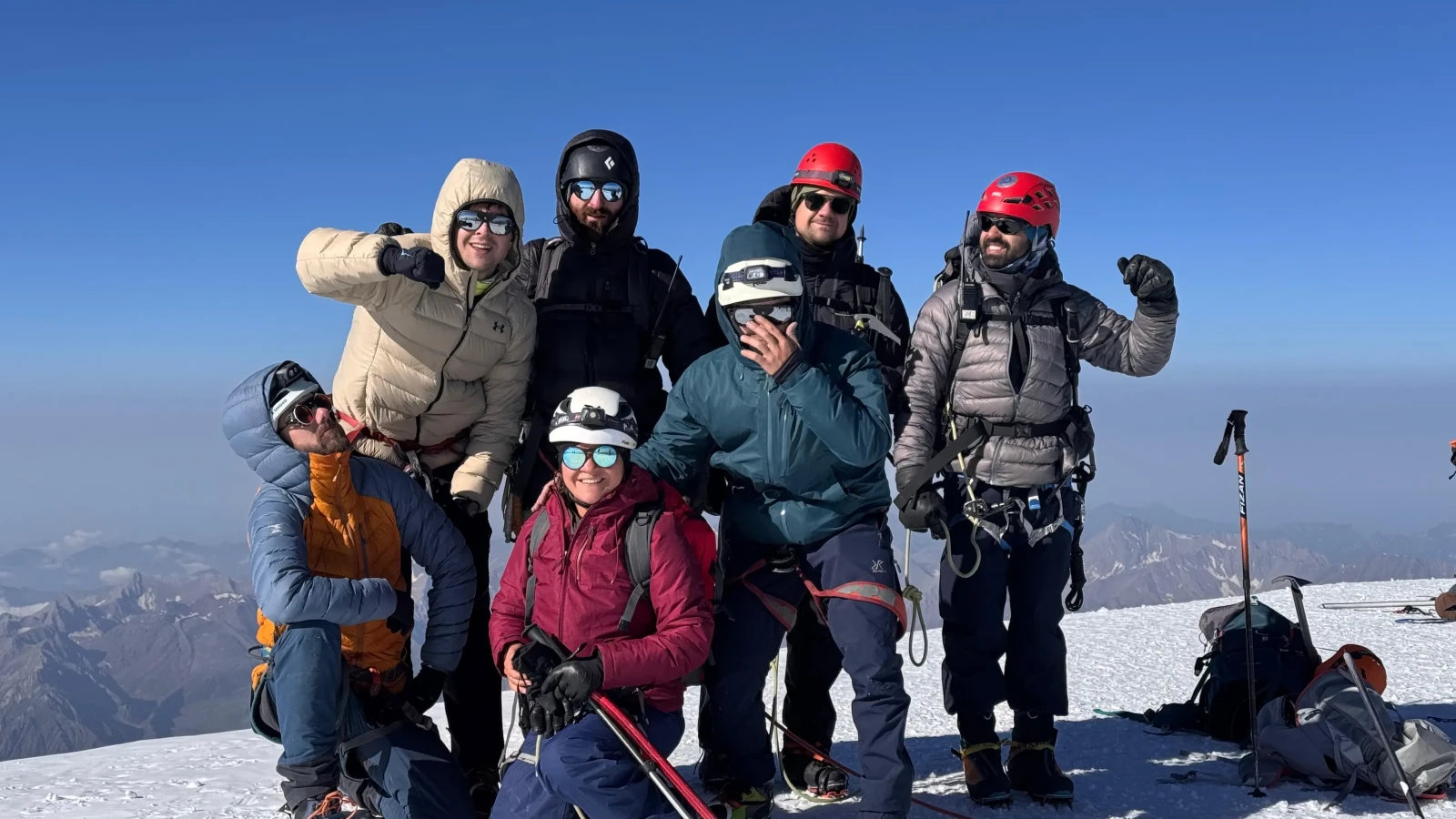
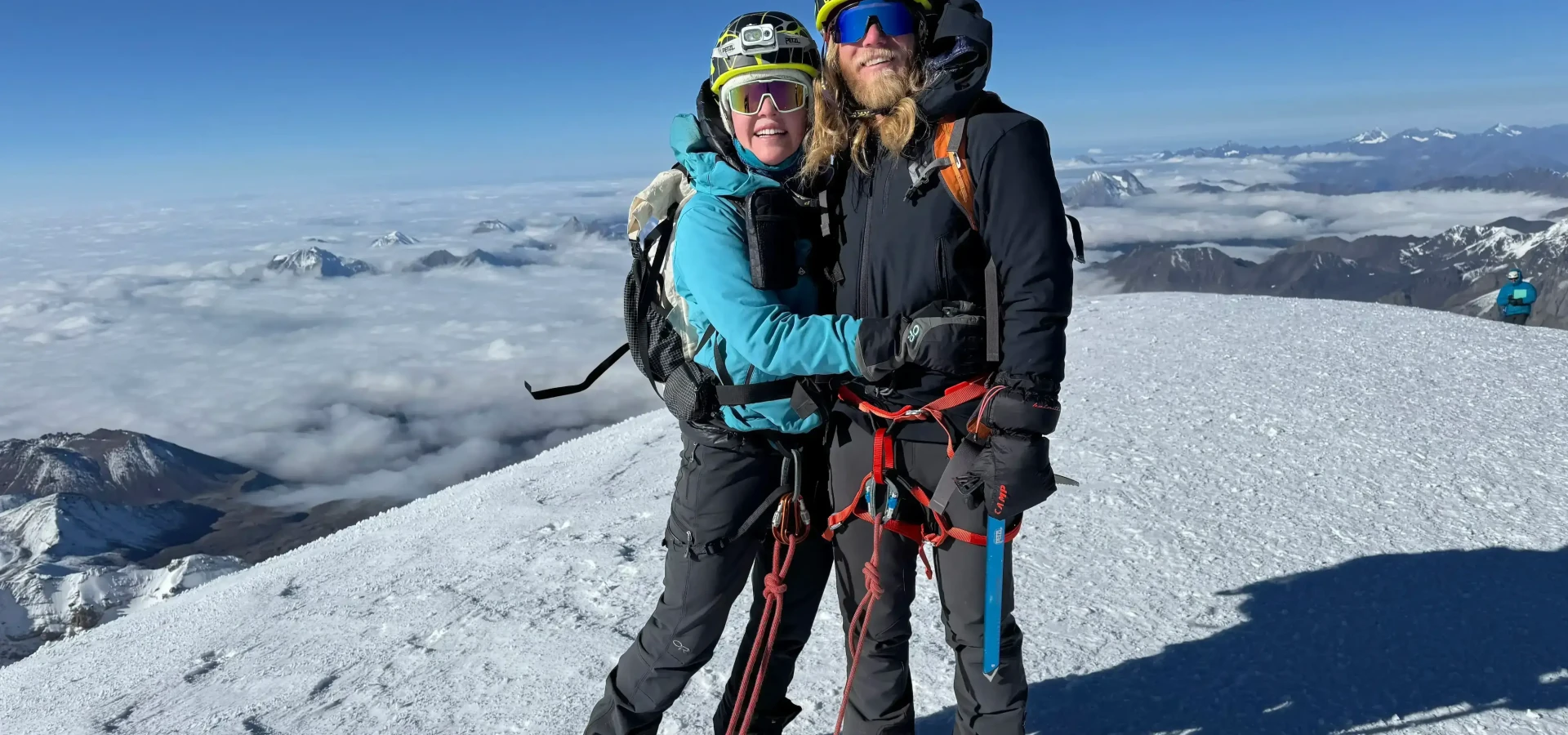
When they finally reached the 5,054-metre summit, the climber didn't cheer or celebrate. He simply dropped to his knees and started crying.
For Misho, that moment captured something special about mountaineering. The climber hadn't simply reached the summit of a 5,054-metre mountain. He had overcome his own fears and achieved something that had once seemed beyond his reach.
It's a reminder that reaching the summit can mean something different to every climber, and that some of the most memorable experiences in the mountains go far beyond the views.
When is the best time to climb Mount Kazbek?
The main summer mountaineering season runs from mid-June to late September, with July generally offering favourable conditions, according to Misho.
For experienced ski mountaineers, April and May can also provide opportunities to explore Kazbek on skis, including descents from high on the mountain when conditions permit.
Kazbek also offers excellent terrain for ski touring. For groups with a good level of fitness, it is often possible to start the ascent directly from Altihut. Located at 3,014 metres, the hut provides a comfortable base for ski touring expeditions on Kazbek. As Bethlemi Hut is not managed during the winter season, Altihut is also an alternative accommodation option for guides organising ski touring trips in the area.
The best period for your expedition will depend on your experience, objectives and the mountain conditions.
Planning your own Kazbek ascent
Whether you're preparing for your first 5,000-metre summit or looking for a new challenge in the Caucasus, good preparation makes a real difference.
Choose an itinerary suited to your experience, allow sufficient time for acclimatisation, bring appropriate clothing and remain flexible about mountain conditions.
And above all, remember that the goal isn't simply to reach the summit. It's to return safely with an experience worth remembering.
If you're considering climbing Mount Kazbek, you can explore the guided ascents offered by Misho and his team through Explore-Share.
About Misho
Misho is a Georgian IFMGA/GMGA-certified mountain guide who grew up climbing in the Caucasus. He has worked as a mountaineering, ski touring and ski instructor since 2011 and became an internationally certified mountain guide in 2020.
Having climbed Mount Kazbek around 80 times, he knows the mountain and its changing conditions particularly well. Together with his team, he organises private and small-group mountain adventures across Georgia, from first glacier ascents to more technical climbs and ski touring expeditions.
Misho is part of the Explore-Share community, where travellers can discover his guided expeditions, including:
Express ascent: Climb Mount Kazbek in 3 or 4 days
Mount Kazbek ascent: All-inclusive 6-day package
Photos courtesy of (c)Misho.